
By Dr. Talal Othman
Sweden were not the team with the most control, but they were the team with the most belief in their chances.Elanga’s goal was a declaration that Sweden, despite their setbacks, still possess a beating heart and a fighting spirit that battles until the very end.This draw is not just a point… it is a new beginning in their World Cup journey.
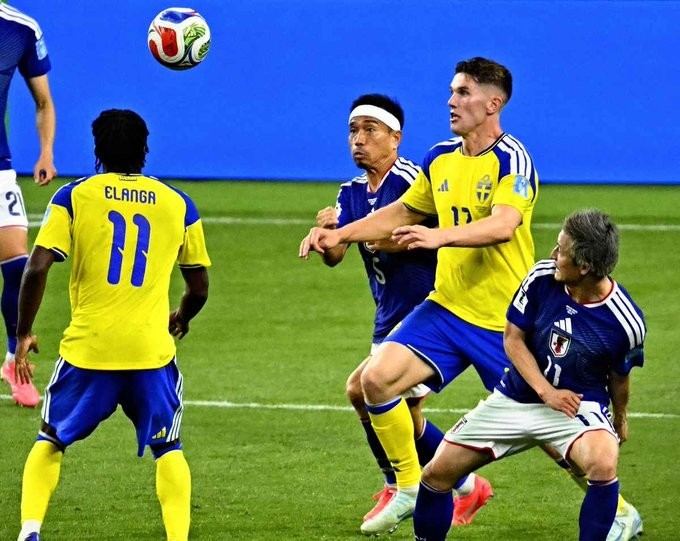
Second Half: Elanga’s Moment… The Moment of QualificationIn the minute Sweden needed it most, the player who never misses his cue appeared:
Anthony Elanga.
Anthony Elanga.
- A rapid run in behind the defence
- Excellent reading of space
- A composed, precise shot that brought Sweden back to life
Japan started the match with their well-known style:
- Pressing the ball carrier from the first third
- Tightening spaces in Sweden’s midfield
- Forcing Sweden to play long balls
- Quick transitions after winning the ball
- Short passes in the central areas
- Runs from Kubo and Mitoma
- Creating numerical superiority on the flanks
Secondly: Sweden — A Realistic Team Waiting for the Right Moment1) Medium Defensive BlockSweden did not press high. Instead, they played with a “medium block”:
- Solid defensive line
- Reduced spaces between the lines
- Waiting for Japanese errors in passing
- Long balls behind the full-backs
- Elanga’s runs in behind
- Quick transitions after regaining possession


