Full Analysis of England’s 2026 World Cup Squad
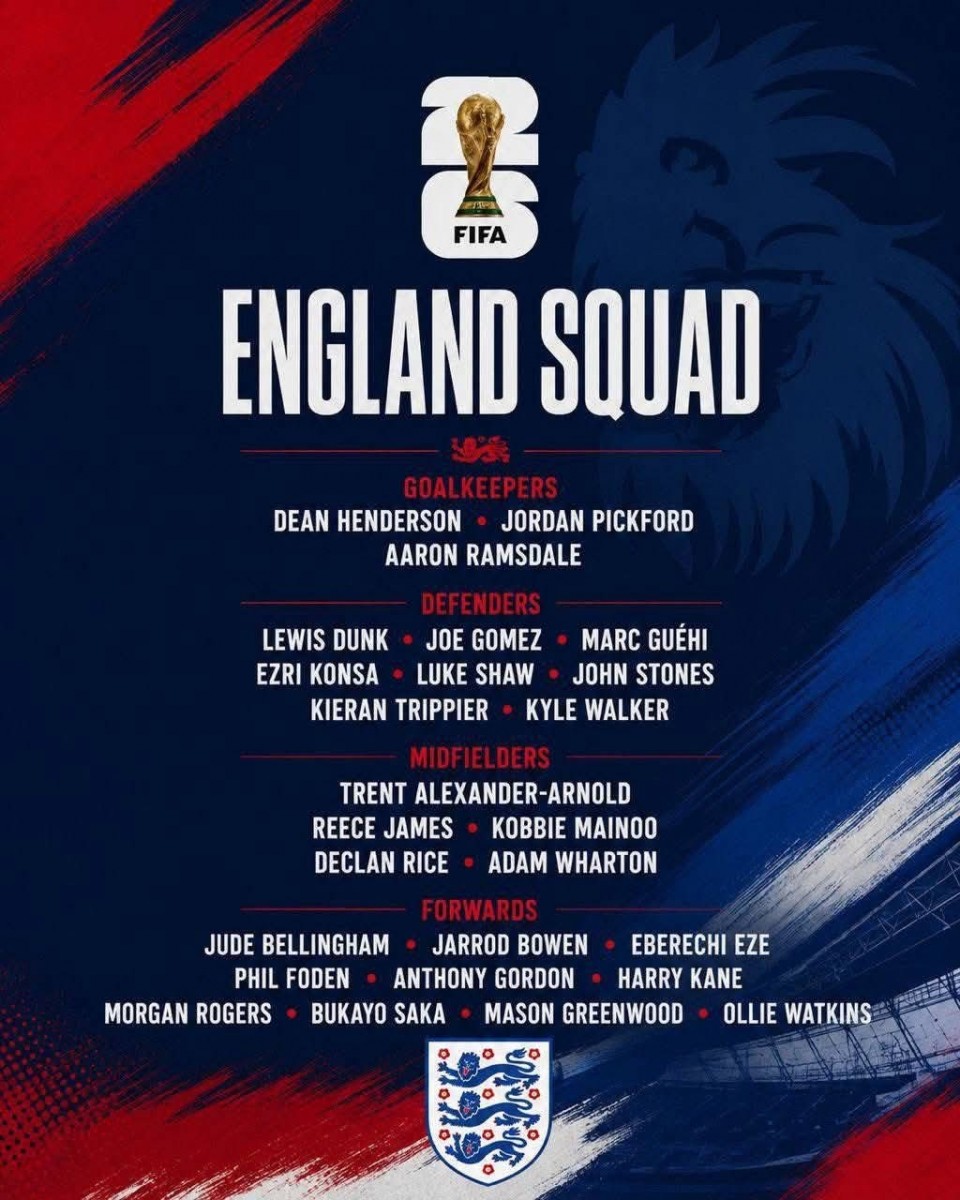
England enter the 2026 World Cup with one of the most balanced, powerful, and tactically disciplined squads in their modern history. Yet the final list also reveals bold decisions, controversial omissions, and a clear shift in the team’s identity.
Below is a complete breakdown of the squad’s structure, strengths, weaknesses, and tactical direction.
1. Goalkeepers — Stability Over Star Power
England rely on goalkeepers known for consistency rather than brilliance.
-
Jordan Pickford remains the No.1 due to his experience and tournament mentality
-
Backup keepers were chosen for reliability
-
England still lack a world‑class sweeper‑keeper like Neuer or Courtois
Conclusion: England will depend more on defensive organization than on spectacular saves.
2. Defence — Physically Strong, Tactically Conservative
The English back line is built on speed, strength, and recovery ability.
Key players:
-
John Stones — hybrid CB/DM who supports build‑up
-
Kyle Walker / Reece James — elite recovery pace
-
Harry Maguire — aerial dominance and experience
-
Luke Shaw / Ben Chilwell — width and crossing
Strengths:
-
Physical superiority
-
Strong in duels
-
Excellent in defensive transitions
Weaknesses:
-
No natural left‑footed center‑back
-
Predictable build‑up under pressure
-
Some defenders lack quick passing under high press
3. Midfield — The Heart of England’s New Identity
England’s midfield is the strongest it has been in decades.
Key names:
-
Jude Bellingham — the emotional and tactical leader
-
Declan Rice — the stabilizer
-
Kobbie Mainoo / Conor Gallagher — pressing, energy, vertical runs
Tactical shape:
-
Bellingham plays as a free 8/10 hybrid
-
Rice controls tempo and protects the back line
-
The third midfielder changes depending on the opponent
Conclusion: England can finally control midfield battles, not just survive them.
4. Attack — World-Class Talent, Ruthless Competition
England’s attack is among the strongest in world football.
Key attackers:
-
Harry Kane — link‑up play and finishing
-
Phil Foden — creativity between the lines
-
Bukayo Saka — balance, speed, defensive work
-
Marcus Rashford / Jarrod Bowen — pace and depth
-
Bellingham (advanced role) — late runs and decisive moments
The biggest controversy:
Cole Palmer was left out.
This reflects:
-
Preference for system players over free creators
-
A tactical approach that prioritizes discipline
-
Intense competition in attacking midfield roles
Conclusion: England lose a unique creative profile, but maintain tactical rigidity.
5. Tactical Identity — A Team Built for Tournaments
England’s 2026 squad is designed for:
-
Low‑risk possession
-
Strong transitions
-
Physical dominance
-
Defensive discipline
-
Relying on individual brilliance in key moments
This is not a team built for “beautiful football” — it is built to win tournament matches.
6. Weaknesses — The Risks England Must Manage
Despite the talent, England have clear vulnerabilities:
1) Creativity vs. Low Blocks
Without Palmer or Maddison, England may struggle to break compact defenses.
2) Dependence on Kane & Bellingham
Losing either player changes the entire identity of the team.
3) Goalkeeper Ceiling
Pickford is reliable — but not elite compared to top nations.
4) No Left‑Footed Center‑Back
Limits build‑up angles and passing variety.
7. Final Verdict — A Team Capable of Reaching the Final… With Conditions
England’s 2026 squad:
Strengths
-
Experience
-
Physical power
-
World‑class midfield
-
Star‑studded attack
-
Tactical discipline
Weaknesses
-
Overly conservative
-
Limited creativity
-
Dependence on key individuals
Final judgment: England can reach the semifinals or even the final, but success depends on:
-
Bellingham’s form
-
Kane’s fitness
-
The coach’s bravery in decisive moments