
By Dr. Talal Othman
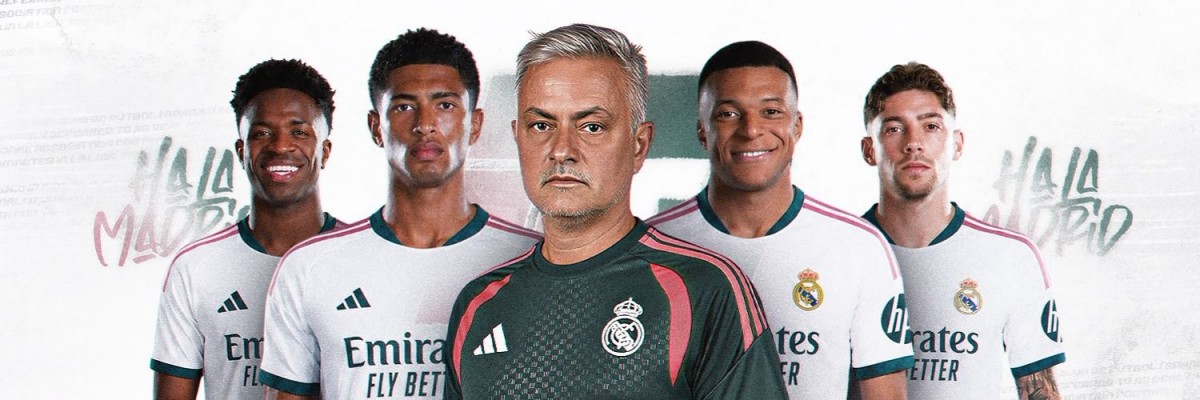
Extending Vinicius’s contract is a strong commercial and sporting step, but it does not fix the structural imbalance that Real Madrid has suffered from for two seasons… and it may even make it more complicated. What I raised opens an important door: Has Real Madrid become a team that possesses extraordinary attacking power, yet lacks an identity? Extending Vinicius’s contract for six years strengthens the stability of the attacking project, but it does not address the defensive balance problem that became clear since Mbappé’s arrival and worsened with the presence of several players who do not contribute enough defensively. Vinicius… Between the Glow of Talent and the Shadows of Lost Balance at Real Madrid No one disagrees that Vinicius Junior is one of the most important sporting and commercial assets at Real Madrid over the past decade. The player who arrived as a teenager from Flamengo has today become one of the pillars of the club’s attacking project. Extending his contract for another six years reflects the management’s desire to secure the core foundations before entering a new phase led by Kylian Mbappé. But the question that forcefully imposes itself is: Does keeping Vinicius enhance the attacking strength… or does it deepen the imbalance the team is suffering from? Vinicius: An undeniable value… but he is not the solution Vinicius is an exceptional player, there is no doubt about that.
His speed, ability to break lines, courage in one-on-one situations, and impact in big matches have made him one of the most decisive players in Europe. But modern football is no longer measured only by what a player does when the ball is at his feet, but by what he does when he loses it.
And Real Madrid’s problem is not in scoring goals, but in the moment they lose the ball. It is precisely here that the influence of Vinicius and Mbappé appears, and that influence is not always positive. The Mbappé–Vinicius duo: Extraordinary attacking power… and an exposed defensive gap When the coach decides to keep Mbappé and Vinicius up front, he gives the team a clear attacking advantage in transitions, but at the same time he leaves the midfield exposed. The numbers do not lie:
Mbappé ranks 1479th out of 1483 players in successful defensive interventions.
Vinicius and Mbappé recorded only two interceptions throughout the season. This means that Real Madrid’s initial press is almost non-existent, and opponents can easily bypass the front line, leaving Madrid’s midfield facing large spaces and difficult decisions. This is not the problem of one player, but of an entire system. Bellingham… the player who pays the biggest price Jude Bellingham came to Madrid to be the decisive player, the late-runner, the player of the final touch.
But the presence of Mbappé and Vinicius together forces him into exhausting defensive roles and takes him away from his preferred areas. In many matches, Bellingham found himself covering the flanks instead of the centre, forced to chase full-backs instead of being in the penalty area. The result is clear:
Fewer passes, less influence, and reduced ability to make the difference. Here the legitimate question arises:
Does extending Vinicius’s contract serve Bellingham’s project… or limit it? Mourinho facing a complex dilemma José Mourinho enters his first season at Madrid with an unparalleled attacking arsenal, but he also has one of the most difficult tactical dilemmas in Europe:
How can a balanced team be built when you have players who neither press nor defend? Bernardo Silva may help close some gaps, Cucurella may add solidity on the left, and Doué has better defensive ability than Vinicius, but the problem is not in the names… it is in the system. Mourinho needs to redefine the roles of Mbappé and Vinicius, or find a way that allows the team to defend without losing its attacking identity. Real Madrid sweeps the small teams… but stumbles against the big ones This is the essence of the crisis.
Real Madrid can crush smaller teams thanks to individual quality, but it struggles against major sides that are capable of circulating the ball and pressing the midfield. The clearest evidence:
Six defeats against Barcelona in seven matches.
22 goals conceded during that period. These are not casual numbers, but indicators of a structural flaw that has not yet been fixed. Vinicius is not the problem… but he is part of an equation that needs recalibration.
And if Mourinho does not find the solution, this renewal may turn from a strategic step into a wasted opportunity that could have been used to rebuild the team from the ground up.
Time needed to read the article: 10 minutes
Articles
Extending Vinicius’s contract is a strong commercial and sporting step
Comments 0
Most read articles


Latest articles

Latest news
Atalanta 3-0 Bayer Leverkusen

Analytics
How did Chelsea win the Club World Cup?
International football