Flick’s Barcelona: Coaching Genius or Player Talent?
Ten straight wins, four goals in Istanbul, and one question: who is really building this team?
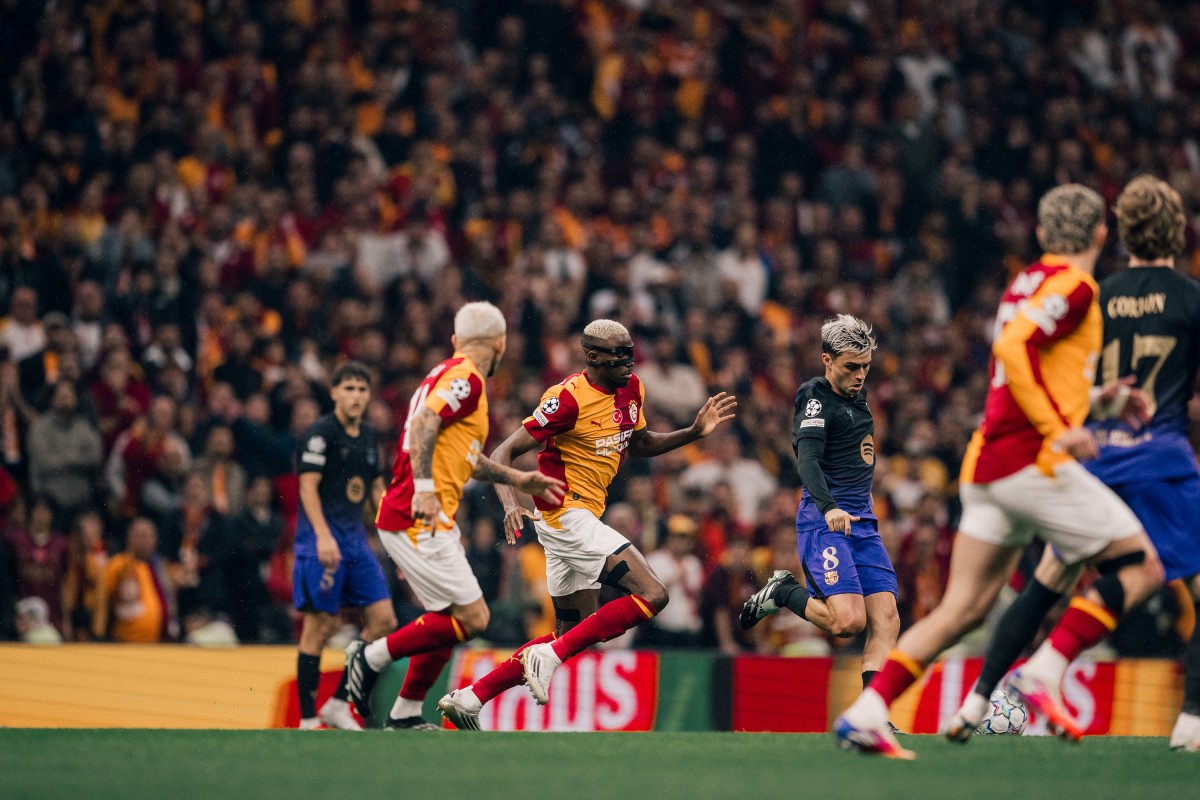
Barcelona beat Galatasaray 4-1 in the heart of Istanbul, extending their winning run to ten consecutive matches this season. When victories pile up like this, the number stops being the story. The story becomes where it comes from: are we watching a coach’s idea reach its peak, or a generation of players with so much talent that any idea would look like it works?
Tuesday night does not settle the answer, but it exposes its parts with rare clarity.
Scene One: A Team That Attacks Even When It Misses
Before anyone scored, Barcelona had already wasted a string of chances through Lamine Yamal, Dani Olmo, Fermín López and Anthony Gordon. Those misses point to something deeper than poor finishing. The team reaches the goal regularly and in numbers, and that kind of repeated access does not come from individual inspiration alone. Behind it is a system that knows how to press high, win the ball back in the opponent’s half, and fill the penalty area with more than one player at the same moment.
This is Hansi Flick’s signature. The German did not come to teach Yamal how to dribble. He came to build a structure around him that makes every dribble end inside the box, not on the touchline.
Scene Two: The Price of Risk
But the same idea comes with a cost, and Barcelona paid it in the 28th minute. Rafael Leão burst down the left with his pace and delivered a cross that Aleksei Batrakov struck first time past Joan García. The goal ran against the flow of play, but it was no accident. The high defensive line is Flick’s trademark, and the space behind it is that trademark’s permanent weakness.
Six minutes later, the price nearly doubled. Gerard Martín put the ball into his own net, only for VAR to rule it out for offside against Barış Yılmaz. The night of the tenth win almost became the night of the first defeat, by a matter of centimetres. It is a reminder that Flick’s plan does not always protect the team. Sometimes luck and technology do.
Scene Three: When the System Speaks
The 43rd-minute equaliser is the clearest evidence in the coach’s favour. The scorer was neither a striker nor a playmaker, but full-back João Cancelo, with a powerful strike from inside the penalty area after a pass from Olmo.
When does a full-back arrive in the box at a decisive moment? When his tactical role is designed to drive into the centre rather than stay on the line. Talent alone does not explain this goal; Cancelo has been talented for a decade. What explains it is the position he was placed in.
Scene Four: When Talent Speaks
Then came the second half, and the stage passed to Lamine Yamal. In the 50th minute, he delivered a precise cross that Fermín López turned into the go-ahead goal. Three minutes later, he set up the third for Anthony Gordon. And in the 65th minute, he was part of the move that Karim Adeyemi finished for the fourth.
A World Cup winner with Spain and the leading Ballon d’Or contender decided the match in fifteen minutes. That kind of decisiveness cannot be drawn on a whiteboard. A coach can place Yamal on the wing, free him from defensive duties, and give him a teammate who moves into the right space. But the accuracy of the cross, its timing and the decision in the moment belong to Yamal’s feet alone.
No tactical plan turns an ordinary player into the creator of three goals in fifteen minutes. And no talent, however great, is enough on its own to produce ten wins in a row.
Scene Five: The Bench, Where the Coach Signs His Name
There is a small detail in the fourth goal worth pausing on: the final pass came from Gabriel Jesus, a substitute, and the finish from Karim Adeyemi, also a substitute. That decision belongs to the coach alone. Two changes entered a match that was all but settled, and rather than simply protecting the lead, they extended it.
Big teams ruled by stars alone usually fade when their stars leave the pitch. Flick’s Barcelona holds the same level after substitutions. That is one of the most honest measures of a collective project, rather than a mere collection of stars.
Scene Six: Wastefulness That Will Not Be Forgiven Against the Elite
After the fourth goal, Yamal, Adeyemi and Jesus wasted easy chances, and goalkeeper Uğurcan Çakır shone. Against Galatasaray, that wastefulness cost nothing. Against stronger, more ruthless opponents, it becomes a serious weakness. This is where the coach’s responsibility meets the players’: the team creates chances generously, but has yet to learn to be stingy about wasting them.
The Verdict: Who Owns the Ten Wins?
The question rests on a false binary. It is more accurate to separate two things:
- The size of the win is made by talent. The four goals in Istanbul carry Yamal’s signature before anyone else’s.
- The consistency of winning is made by the coach. Ten straight wins, eight in La Liga and two in Europe, including a 5-1 against PSV Eindhoven and then a comeback in Turkey, do not come from individual brilliance. Brilliance is volatile by nature; consistency only comes from a system.
The equation is clear: the players give Barcelona a high ceiling, and Flick gives it a solid floor it does not fall below. But a coach’s true genius is not measured in the match Yamal decides alone. It is measured in the match where Yamal is absent or stumbles, and the team wins anyway.
The Real Test: Paris
Matchday three takes Barcelona to Paris Saint-Germain, champions in each of the last two seasons. There, fifteen minutes of Yamal’s magic will not be enough, and the opponent will not forgive a high line whose space can be breached the way Leão breached it. There, too, missed chances may close the door on the match.
If Barcelona leave Paris victorious, there will be no room left to debate, and the season will be written in Flick’s name. If they fall, the question will return in a harsher form: were these ten wins the fruit of a project, or the fruit of talent that has yet to face an opponent at its level?
Dr. Talal Othman, General Manager — GCC Sport