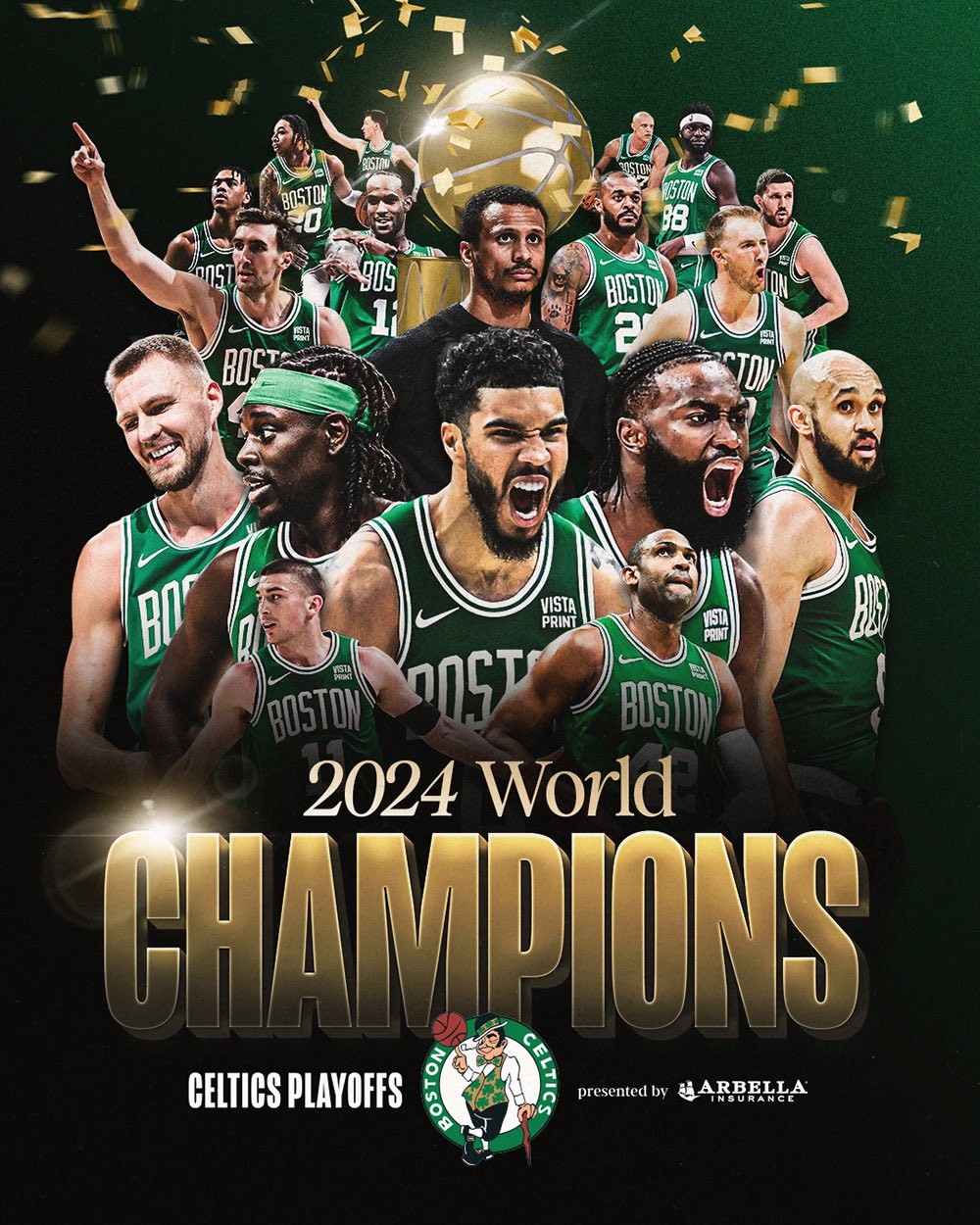
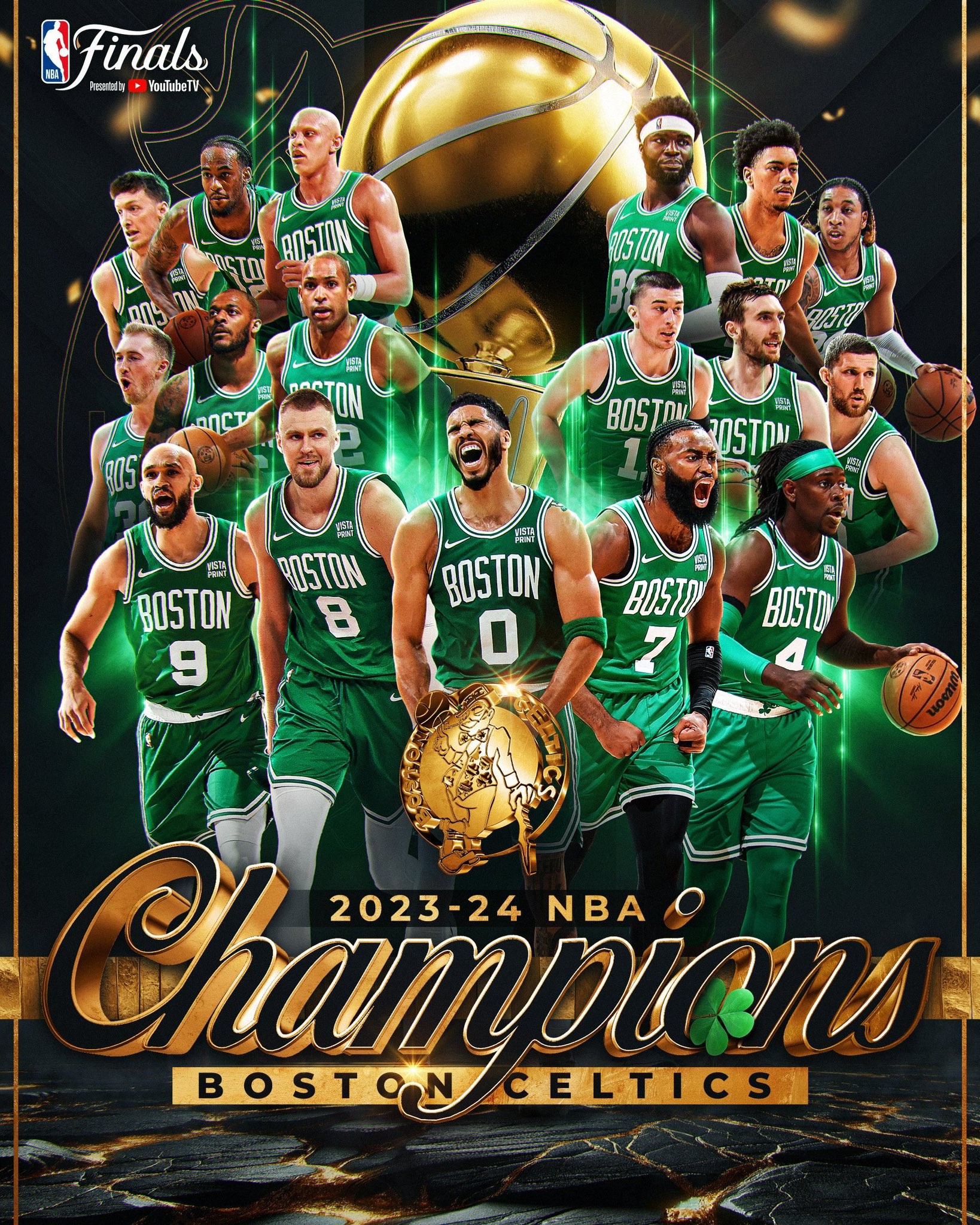
THE GOOD NEWS for those who don't quite know how to contextualize these Boston Celtics after a dominant-by-any-measure championship season: They will return more or less intact to make another run at it next season, with a chance to cement their place as one of the great teams of the modern era.
Jayson Tatum and Jaylen Brown are 26 and 27, respectively. Tatum has made first-team All-NBA in three straight seasons. Brown made third-team last season and barely missed this season. His steely postseason, crowned with Finals MVP, indicates he might have another level to hit. Boston might not have a traditional MVP centerpiece -- Tatum finished sixth in the voting this season and has never finished above fourth -- but if Brown's ascent continues, they could boast two of the top 10 or 12 players over the next few seasons. Tatum might not have hit his ceiling either.
The core players around them, the threads connecting the Danny Ainge and Brad Stevens regimes, are all under contract for next season and in some cases beyond. Only Al Horford, the stalwart whose reacquisition marked the first salvo of the Stevens era, is old in NBA terms. There are what should be smooth extension talks coming for Tatum and Derrick White, and perhaps trickier ones surrounding Sam Hauser and Kristaps Porzingis (later in Porzingis' case). The team will get ultra expensive. The second apron hems you in. But you live to get a team like this. You pay for it and figure out the rest later.
The NBA has not had a repeat champion since the Warriors in 2018. Even the Denver Nuggets, with the world's best player, seemed to publicly downplay the importance of repeating -- focusing instead on winning multiple titles over the next decade in San Antonio Spurs-esque fashion.
Boston should take the opposite approach. Chase the repeat. State it as its goal. Break the no-repeat stretch, and its historical standing becomes beyond dispute. If the Celtics stay healthy, they will have everything they need. They should enter next season as favorites.
THERE HAVE BEEN dominant regular-season teams that were a bit less dominant in postseason title runs. There have been dominant postseason teams that coasted through the regular season. The 2000-01 Lakers of Shaquille O'Neal and Kobe Bryant are the quintessential example. They went 15-1 in the playoffs and mauled opponents by 12.8 points per game -- after going 56-26 with a plus-3.7 differential in the regular season.
Those Lakers gain historical steam because they three-peated, and the first of those three teams -- the 1999-2000 version -- had almost the inverse campaign of its successor: historically great regular season, difficult playoff road. It went 67-15 with a plus-8.5 margin and gutted out a 15-8 playoff record with a plus-2.3 margin.
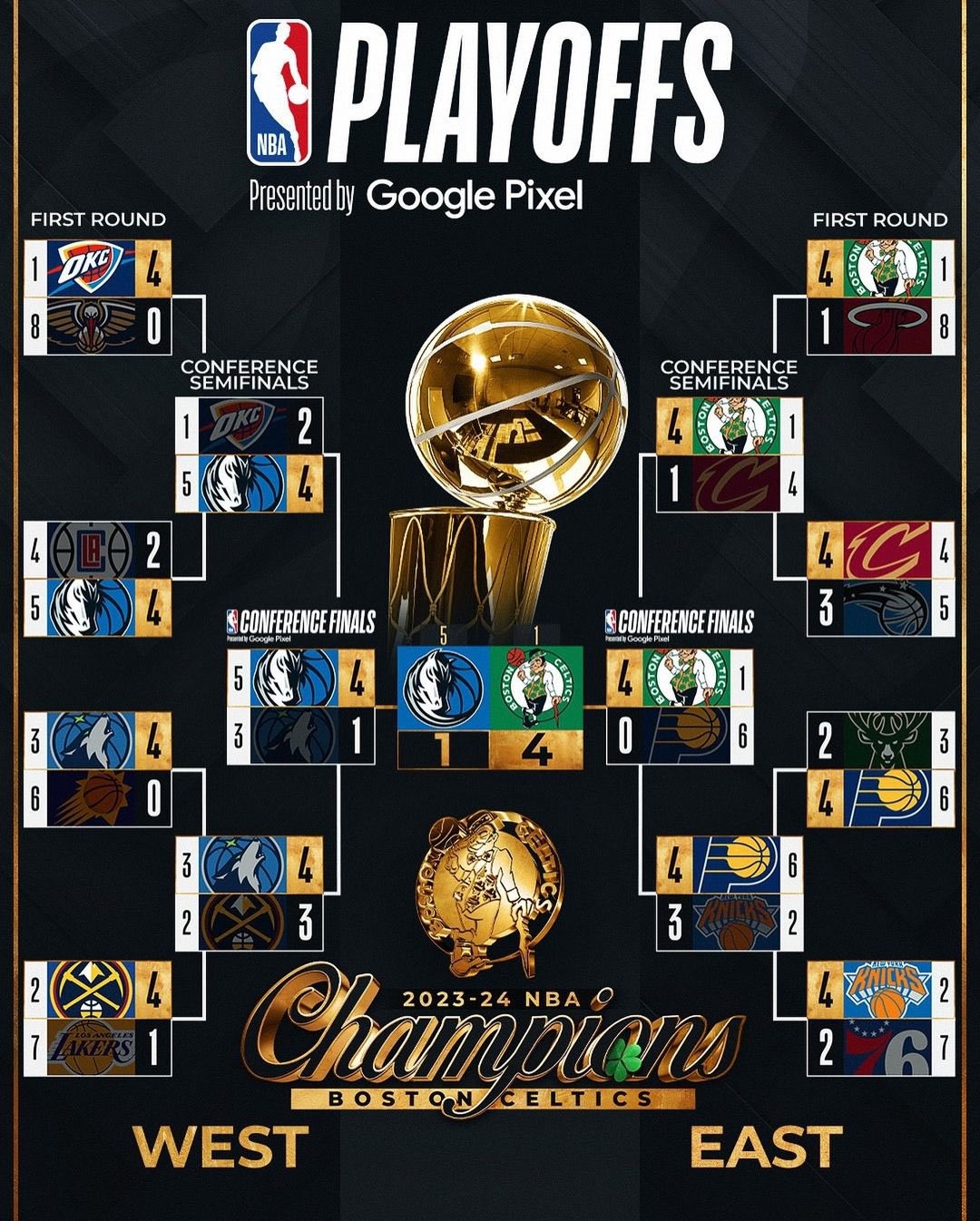
These Celtics check every statistical benchmark. They went 64-18 and then 16-3 in the playoffs. They piled up huge scoring margins in both segments: plus-11.3 in the regular season, plus-8.0 in the playoffs. The latter figure was above 10 before their 38-point drubbing in Game 4.
Even so, the record and point differential together put Boston in rare air. The only weak spot is in their slate of postseason opponents, perhaps the overall state of the East, and in the vague feeling that they were or at least seemed more vulnerable than the NBA's historic titans: that their offense was prone to aimlessness at inopportune times, in part because they might not (yet) boast any one superstar at the level of the immortals who usually helm title teams.