By Captin Loui Osman
The 2026 FIFA World Cup will not only be historic for its expanded format and tri‑nation hosting, but also for a sweeping set of new refereeing regulations designed to elevate fairness, accelerate play, and reinforce discipline on the pitch. These changes mark one of the most ambitious overhauls in modern football, reshaping how referees, players, and teams interact during high‑pressure moments.
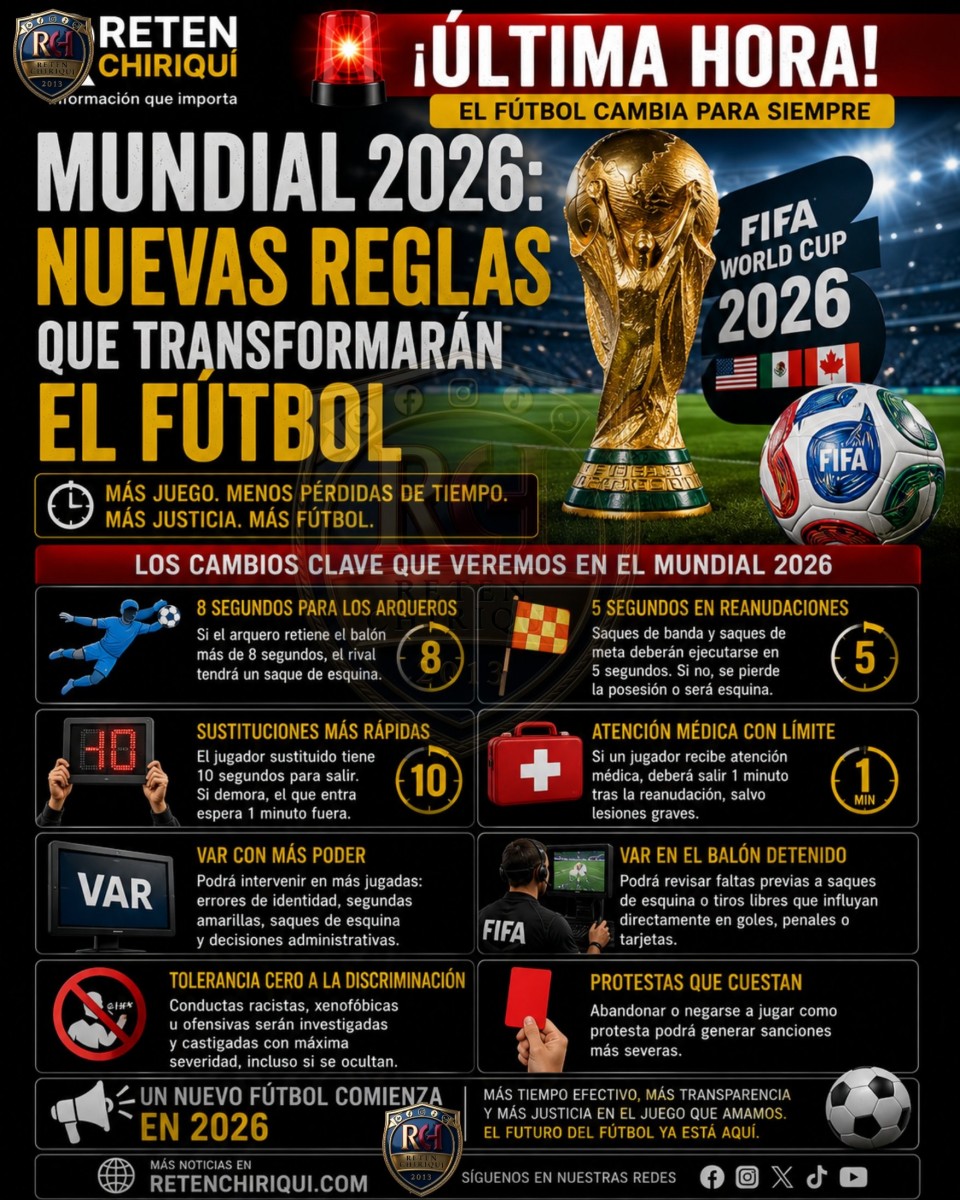
Expanded VAR Intervention
VAR will play a more decisive role than ever before, with new categories of review introduced to reduce critical errors:
-
Second yellow cards leading to dismissal will now be reviewable.
-
Mistaken identity in issuing yellow cards can be corrected through VAR.
-
Fouls preceding set pieces may be reviewed to ensure accuracy.
-
Corner‑kick decisions can be checked, provided the review does not delay the restart.
This expansion transforms VAR from a corrective tool into a central pillar of decision‑making, aiming to minimize controversy in decisive moments.
Zero Tolerance for Covered‑Mouth Confrontations
In a groundbreaking step to combat verbal abuse and racism, any player who covers their mouth with a hand or shirt during a confrontation will be shown a straight red card.
Additional disciplinary measures include:
-
A player who leaves the pitch in protest after disputing a referee’s decision may be sent off.
-
Team officials who encourage players to abandon the field can also be sanctioned.
-
If a collective protest causes a match suspension, the protesting team may be declared the loser.
These measures reinforce the authority of referees and promote a culture of respect.
Stricter Control of Injury‑Related Delays
To prevent tactical misuse of injuries:
-
Any outfield player receiving treatment must remain off the pitch for 60 seconds before returning.
-
Exceptions apply only to goalkeepers and suspected concussion cases.
-
Referees will closely monitor teams attempting to use injury breaks for tactical mini‑meetings.
This rule aims to curb time‑wasting and maintain the rhythm of the match.
Five‑Second Rule for Restarts
A major innovation targets slow restarts:
-
Players have 5 seconds to take a throw‑in. Failure results in the throw being awarded to the opponent.
-
If a goalkeeper delays a goal‑kick beyond the allowed time, the restart becomes a corner kick for the opposing team.
Goalkeeper Possession Rule Updated
-
Maximum holding time: 8 seconds.
-
The referee will manually count down the final 5 seconds.
-
Violations result in a corner kick, replacing the previous indirect free kick.
These changes are designed to accelerate the game and reduce “dead time” that frustrates fans and disrupts momentum.
Conclusion: A Faster, Fairer, More Disciplined World Cup
The 2026 World Cup will showcase more than footballing talent — it will introduce a new refereeing philosophy built on speed, transparency, and respect. With stricter enforcement, expanded VAR authority, and innovative timing rules, FIFA aims to deliver a tournament that reflects the modern demands of the global game.
Football in 2026 will be sharper, cleaner, and more dynamic — exactly what fans expect from the world’s biggest sporting event.