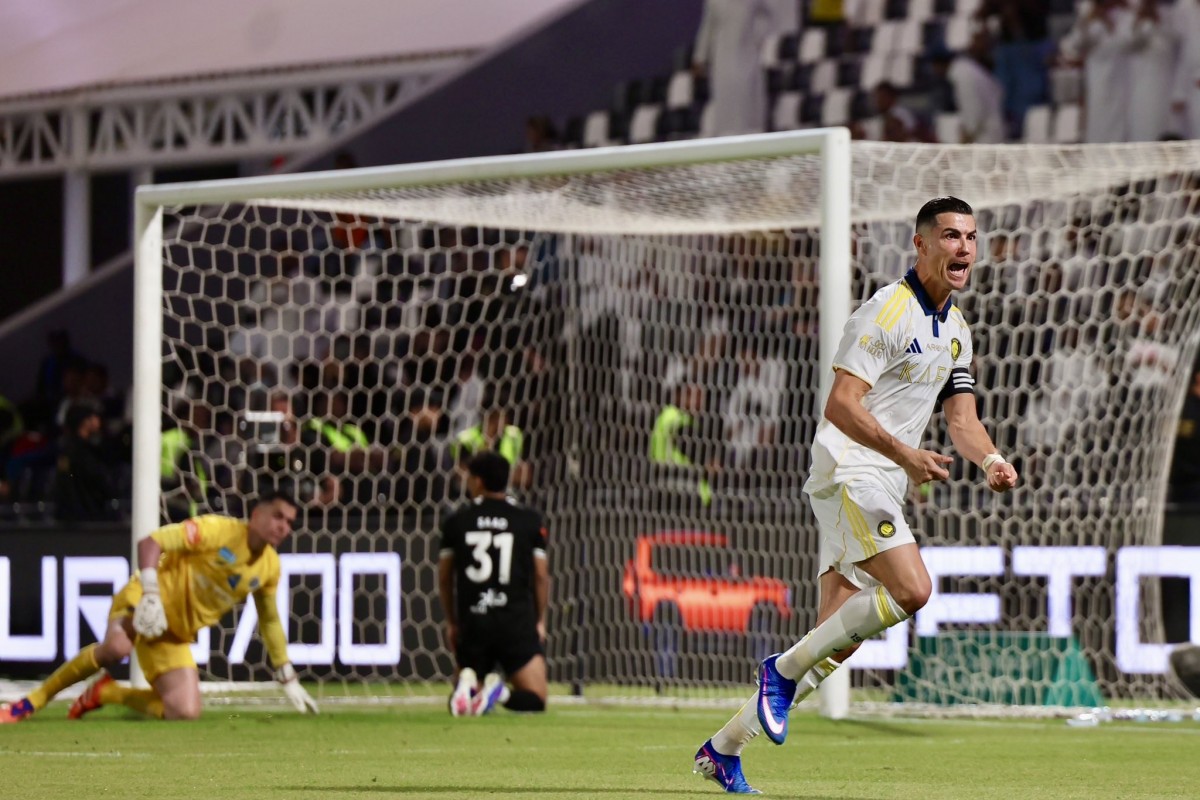
Every time Cristiano Ronaldo approaches a major tournament, the debate resurfaces: is the Portuguese icon still capable of leading his nation toward glory, or has time finally caught up with one of football’s greatest figures? With the 2026 World Cup approaching, the question feels more urgent than ever because this tournament may well be the final chapter in a career that began more than two decades ago.
Despite being 41 years old, Ronaldo remains a defining presence in world football. His move to Al‑Nassr in Saudi Arabia did not dim his star; instead, it reshaped his role into that of a pure striker who relies on positioning and experience rather than the explosive pace of his youth. This season, he lifted the Saudi Pro League title for the first time and continued extending his historic record as the all‑time leading international scorer with 143 goals in 226 appearances for Portugal.
Yet the debate persists. During Euro 2024, Ronaldo started every match but failed to score, triggering criticism toward coach Roberto Martínez, who insists that selecting Ronaldo is “a football decision, not a symbolic one.
Meanwhile, Portugal’s golden generation is reaching its peak. Bruno Fernandes broke the Premier League assist record, while PSG’s trio Vitinha, João Neves, and Nuno Mendes delivered world‑class performances. A wave of young talent continues to push the team to new heights.
When Martínez took charge in 2023, he faced a clear choice: start a new era without Ronaldo, or keep the legend as captain and leader. He chose the latter, and Portugal’s 2025 UEFA Nations League title strengthened his stance especially after Ronaldo scored in the final against Spain.
Inside the dressing room, Ronaldo’s influence remains undeniable. Vitinha calls him “one of the greatest players in the history of the game,” while Bruno Fernandes insists that “Cristiano inside the box is still top level.”
Still, his presence shapes the team’s style. Some analysts believe Portugal looks more fluid without him, while others argue that his experience in high‑pressure moments is irreplaceable.
Portugal enters the 2026 World Cup with one of the strongest squads in its history, opening the group stage against DR Congo, then Uzbekistan, and finally Colombia. Yet the central question remains: Will Ronaldo be part of the solution… or part of the debate?
Martínez dismisses concerns about age, saying: “The World Cup is not measured by age or club form, but by a player’s ability to adapt to the tournament.
And perhaps that is the real test: Can Ronaldo, at 41, write the final line of his story in golden ink?
Between legacy and reality, emotion and tactical logic, the 2026 World Cup may become the ultimate examination of a once‑in‑a‑generation legend.