Saudi Arabia's PIF Completes Its Takeover of the Big Four Clubs: A Watershed Moment in the Privatization of Saudi Football
By: Dr. Talal Othman | Sports Media Researcher
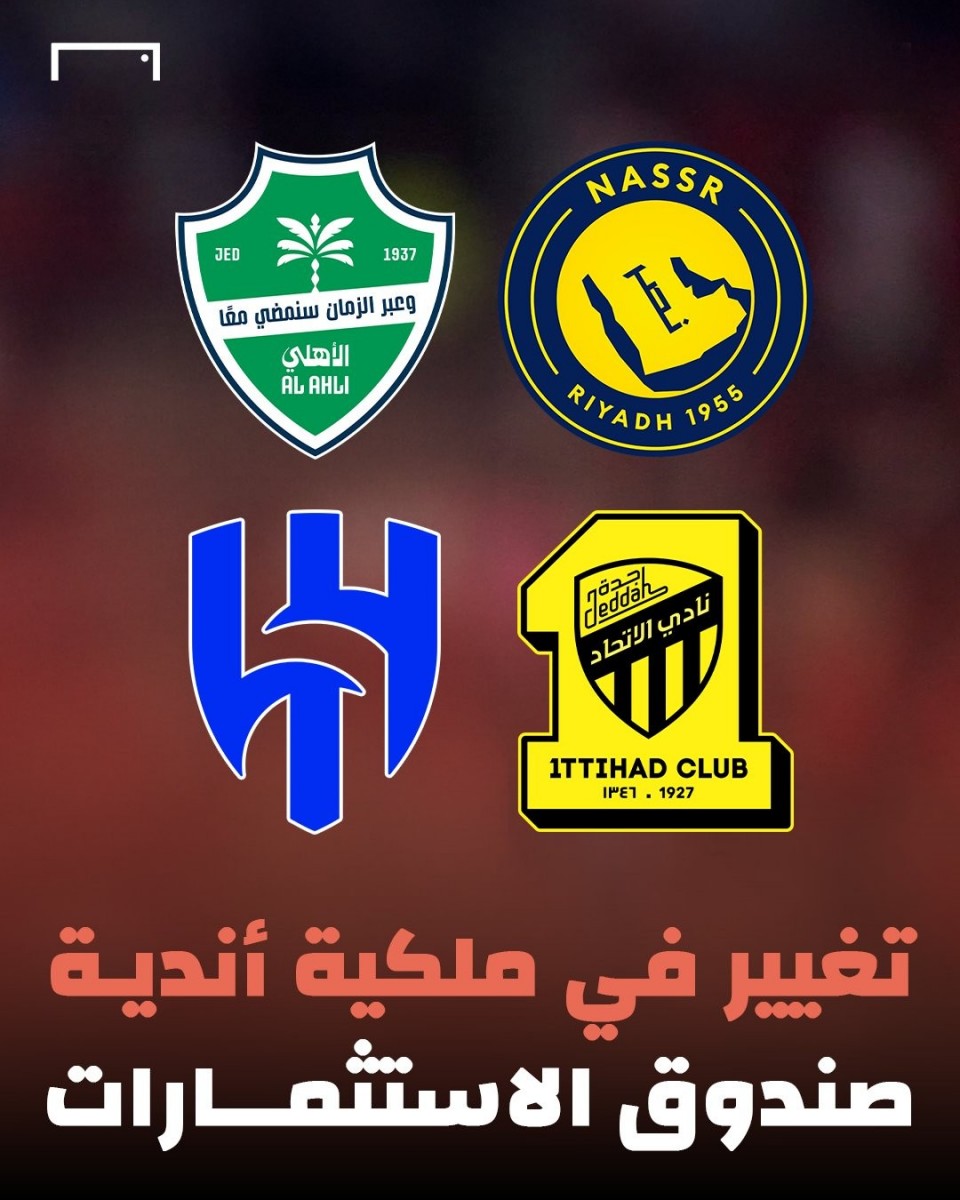
Saudi Arabia's flagship club privatization project has entered its decisive phase. On Wednesday, the Ministry of Sport announced the start of transferring ownership of the shares held by the nonprofit foundations which represent 25% of the capital of Al-Ittihad, Al-Ahli, Al-Hilal, and Al-Nassr's club companie to the Public Investment Fund (PIF), along with the dissolution of those foundations' boards of directors, after completing the required regulatory procedures. With this step, the Saudi sovereign fund moves close to full 100% ownership of the four clubs, in an unprecedented reshaping of the ownership map of Saudi football.
From Partnership to Full Acquisition
This transformation traces back to June 2023, when the state launched the "Sports Clubs Investment and Privatization Project," which converted Al-Ittihad, Al-Ahli, Al-Hilal, and Al-Nassr into joint-stock companies, with ownership split between the Public Investment Fund holding a 75% stake, and a nonprofit members' foundation for each club holding the remaining 25%. That was the first step that opened the door to the largest wave of football signings in the history of the Saudi league from Cristiano Ronaldo to Karim Benzema, Neymar, and others — and notably lifted the tournament's commercial value.
Today's transfer of the remaining stake represents the "second stage" of this trajectory: the shares previously held by the nonprofit foundations move directly to the Fund, completing the full institutional ownership circle of the four clubs under a single umbrella as part of, according to the Ministry's statement, "completing the transition toward an ownership model that enhances the investment appeal" of these sporting entities.
Administrative Continuity — and a Calculated Withdrawal
Notably, this step did not arrive as a sudden administrative shake-up. According to sources cited by Asharq Al-Awsat, the clubs' boards of directors will continue performing their duties during the current phase until their existing terms expire, including members who had been appointed by the nonprofit foundations a measure meant to preserve club stability and ensure uninterrupted operational and sporting continuity.
At the same time, the organizational structure will see one specific and significant adjustment: PIF employees will resign from chairing the clubs' executive committees, a move that aligns with competitive-fairness regulations and sporting governance rules requiring a separation between the owning entity and the direct executive management of clubs competing within the same league. This particular detail deserves closer analytical attention, as it reflects an awareness of the requirements set by international and continental federations (such as the AFC), which watch closely for any conflict-of-interest scenario involving clubs owned by a single investment entity that compete against one another for the same titles.
A Strategic Reading
This step cannot be separated from the broader economic vision for the Saudi Pro League, which aims to raise the league's market value from roughly $800 million to more than $2.1 billion by 2030, alongside a significant increase in commercial revenue over the coming years. Full, direct ownership by the Fund — rather than a partnership with nonprofit entities of limited financial authority grants it greater flexibility to:
attract global investment partnerships and sponsorship deals without the complications of dual governance; ease pathways for potential future stake offerings or strategic partnerships; unify financial and administrative performance standards across the four clubs in a way that serves the league ecosystem as a whole; and shield the club, in media and investment terms, from fluctuations in sporting results, by decoupling the fate of the investment from the outcome on the pitch.
Conclusion
This phase is not merely a legal procedure of dissolving boards and transferring share ownership — it is the culmination of a strategic path that began three years ago, aimed at transforming Saudi Arabia's major clubs from traditional sporting entities into investment institutions governed by global standards, capable of competing commercially just as they compete athletically. The question time will answer is this: will this new institutional structure translate into a real leap in revenue and market value for the clubs, or will the true challenge remain in reconciling pure investment logic with the fan-identity that these clubs were built on over the decades?