By Dr. Talal Othman
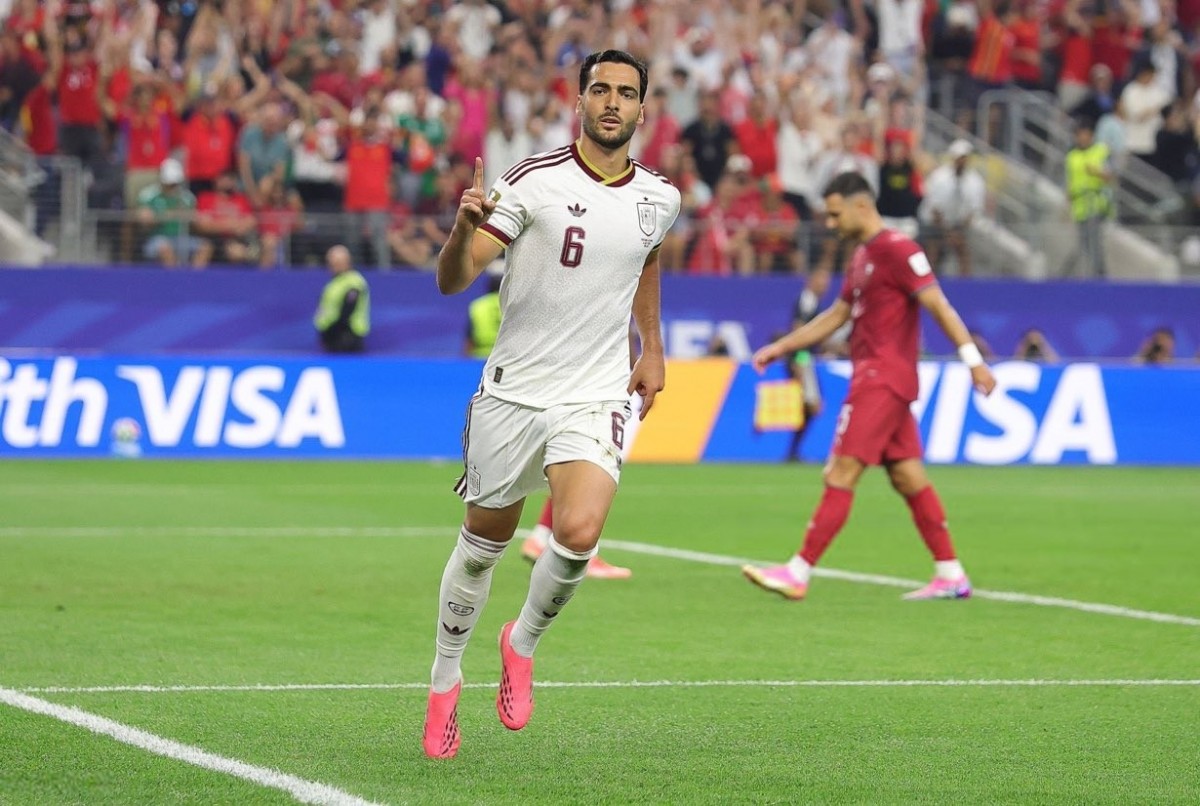
On a football night filled with tension and anticipation, the Spanish national team secured their qualification to the quarter-finals of the 2026 World Cup. They achieved a hard-fought victory thanks to a golden goal scored by Mikel Merino. The midfielder once again proved that he is one of “La Roja’s” most decisive elements in critical moments.Spain delivered one of their most balanced performances in the 2026 World Cup. The match combined tactical patience, flexibility in transitions, and the ability to control the rhythm despite facing a difficult opponent. Merino’s goal was the crowning achievement of organized collective work, not just an individual moment.A Goal at the Perfect MomentMerino’s goal came at a time when the match was becoming increasingly complicated. Spain faced a well-organized opponent who closed spaces and relied on quick transitions. Nevertheless, the Spaniards maintained their composure, continued to circulate the ball intelligently, and eventually broke through from the center. Merino finished the attack with a calm touch from a player who fully understands the value of the moment.Spain’s System… A Collective Strength Moving Forward SteadilyThe qualification was not the result of an individual leap, but the fruit of a cohesive system that has shown its maturity in the tournament. Spain played in their usual style:
Spain qualify… Merino decides… and the system operates with high efficiency. This team is sending a clear message: they are here to fight for the title, not to settle for the knockout stages.Mikel Merino was not just the scorer of the qualifying goal. He was the calm mind, the foot that knows when to advance, and the player who delivered one of his most mature performances in the World Cup so far. His display in the match was a model for a central midfielder who combines tactical discipline with attacking boldness, and intelligent reading of spaces with decisive finishing.Tactical Role: The Player Who Connects Lines and Creates BalanceMerino played in an advanced central midfield role but was not restricted to one duty. His responsibilities varied between:
This type of movement must be trained continuously, as it depends on timing rather than speed.The Spanish Defense: Solidity Despite Attacking AdvancesSpain maintained good defensive balance despite the advancement of their full-backs.Strengths:
- Organized possession without exaggeration
- High pressing after losing the ball
- Tactical flexibility between 4-3-3 and 3-2-5
- Collective participation in creating chances
Spain qualify… Merino decides… and the system operates with high efficiency. This team is sending a clear message: they are here to fight for the title, not to settle for the knockout stages.Mikel Merino was not just the scorer of the qualifying goal. He was the calm mind, the foot that knows when to advance, and the player who delivered one of his most mature performances in the World Cup so far. His display in the match was a model for a central midfielder who combines tactical discipline with attacking boldness, and intelligent reading of spaces with decisive finishing.Tactical Role: The Player Who Connects Lines and Creates BalanceMerino played in an advanced central midfield role but was not restricted to one duty. His responsibilities varied between:
- Linking defense and attack through vertical passes that break lines
- Stabilizing the rhythm when Spain needed calm
- Advancing into spaces behind the forwards to create numerical superiority
- Immediate counter-pressing after losing the ball, which limited the opponent’s transition threats
- Porro drops back to become a second build-up pivot
- Cucurella pushes forward to provide attacking width on the left flank
- Merino and Baena move between the lines to create overloads
- Oyarzabal presses the opposition center-backs to open spaces behind them
- The ability to circulate the ball without losing balance
- Multiple passing options to break defensive blocks
- Effective counter-pressing upon losing possession
- Late runs into the box were a primary weapon
- Circulating the ball on the flanks aimed to pull the defensive block sideways before striking through the middle
- Short vertical passes proved more effective than crosses
- Calm build-up from the back to draw the opponent inward
- Cucurella’s inward movement to drag the full-back and open space on the left
- Baena’s penetrating pass between the lines that clearly broke the defensive block
- Late unchecked run by Merino
- Calm finish reflecting the player’s confidence in his decision
This type of movement must be trained continuously, as it depends on timing rather than speed.The Spanish Defense: Solidity Despite Attacking AdvancesSpain maintained good defensive balance despite the advancement of their full-backs.Strengths:
- Quick counter-pressing after losing the ball
- Good positioning of the center-backs against long balls
- Closing passing angles to the opponent’s playmaker
- Spaces behind Cucurella during transitions
- Slow defensive recovery when the ball is lost in central areas
- Focus on late runs into the box as a decisive tool
- Train full-backs on rapid defensive transitions after attacking
- Increase reliance on short vertical passes to break defensive blocks
- Improve shooting from outside the box as an additional solution for closed matches
- Strengthen cover behind Cucurella and Porro