By Dr. Talal Osman
It was not just a Round‑of‑32 match… it was a defining night in the history of Egyptian football — a night in which Egypt stepped out of the shadow of its past and wrote a new line in the World Cup story, a line titled: “The Pharaohs reach the Round of 16 for the first time.”**
Egypt 4–2 Australia (penalties) after a 1–1 draw in regular and extra time.
On the turf of Arlington Stadium near Dallas, Egyptians lived through one of the most tense and dramatic matches in their four World Cup appearances. A match that began with intensity, passed through difficult turning points, and ended with a celebration that exploded like a storm in the stands and on the pitch.
An early goal… then a harsh test
Imam Ashour, who entered the World Cup with renewed confidence, rose in the 13th minute to head in a brilliant goal after a collective sequence that began with Mohamed Salah from a set piece and was followed by a perfect cross from Karim Hafez.
Ashour, who had gone 29 international matches without scoring before the tournament, has now become one of Egypt’s attacking keys with his second goal of the World Cup.
An own goal brings Australia back
In the 55th minute, Mohamed Hany misjudged a clearance from a set piece and headed the ball into his own net. A painful moment for a player who has delivered a strong tournament despite bad luck — he had already scored an own goal against Belgium, yet also provided an assist against New Zealand.
Salah… the captain who plays through pain
Mohamed Salah started the match despite major doubts about his fitness due to a muscle strain. He finished the group stage as the second‑highest chance creator in the tournament (11 chances), behind Belgium’s Leandro Trossard (13). A number that reflects his enormous influence despite injuries and pressure.
Line‑up challenges… and Hossam Hassan’s solutions
Coach Hossam Hassan faced significant absences:
-
Mohanad Lasheen (suspension)
-
Mohamed Abdelmonem and Ahmed Fattouh (injury)
He was forced into several adjustments, most notably the return of Hamdy Fathy after recovery, and the inclusion of Karim Hafez, who had played only seven minutes before this match — yet delivered a historic assist.
Moments that almost decided the match
-
Omar Marmoush missed a golden chance in the 46th minute.
-
Rami Rabia nearly scored the winner in the 90+4 minute with a header brilliantly saved by goalkeeper Patrick Beech.
-
Salah tried his luck with a powerful shot, followed by Haitham Hassan, but Australia’s defense held firm until the end.
Penalty shootout… when the substitutes shine
Before the shootout, Australia brought on veteran goalkeeper Mathew Ryan, and Hossam Hassan responded by introducing Mahmoud Saber specifically for taking a penalty.
Penalty sequence
-
Mahmoud Saber scores Egypt’s first.
-
Harry Souttar misses Australia’s first.
-
Rami Rabia scores confidently.
-
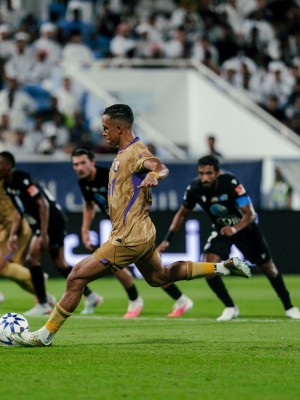
Mohamed Salah scores a stunning Panenka — a moment that will live long in memory.
-
Awer Mabil scores for Australia.
-
Lucas Herrington misses the fourth.
-
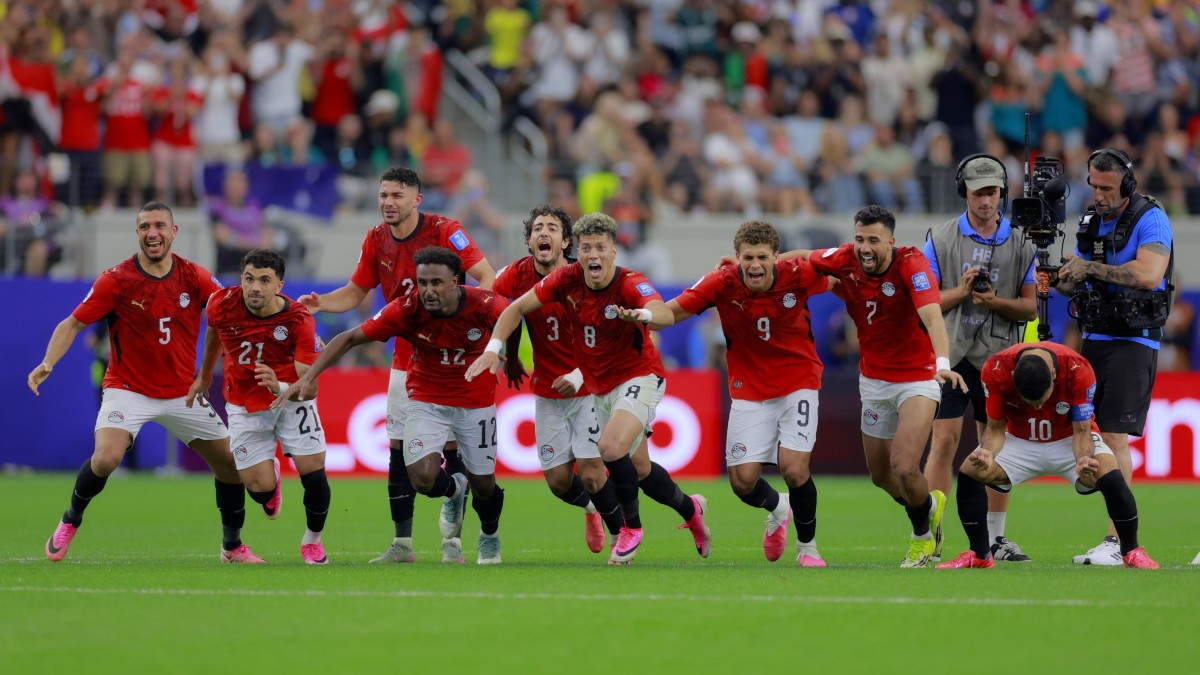
Hossam Abdelmaguid — the substitute who came on to write history — scores Egypt’s fourth, the kick that unleashed unforgettable joy.
“Wallahi, the men did it!”… the moment joy erupted
Players danced, fans sang, and Egyptian flags fluttered across the stands. It was the achievement Egyptians had awaited since 1934… a historic qualification to the Round of 16, after the first win in their World Cup history, and after a mature, calm, and flexible collective performance.
Mohamed Salah… not just Egypt’s captain in 2026, but the creative brain, the leadership spirit, and the player who transforms the team’s identity simply by being on the pitch.
Despite injuries, pressure, and the muscle strain that raised doubts before the Australia match, Salah delivered one of the most mature international performances of his career.
1) The central role in playmaking
His standout number in the group stage: Second‑highest chance creator in the tournament (11 chances) — ahead of most elite playmakers worldwide, surpassed only by Trossard (13).
This number reflects:
-
An ability to create solutions under pressure
-
Exceptional vision in the final third
-
Intelligent movement between the lines
-
Key passes that put attackers directly in shooting positions
In this World Cup, Salah was not a traditional winger — he was an advanced playmaker, dropping into central zones, attracting defenders, and creating space for Marmoush and Ashour.
2) Psychological and leadership impact
Despite injury and muscle strain, Salah started against Australia — a decision with massive psychological impact.
His presence:
-
Raises teammates’ confidence
-
Unsettles opponents
-
Gives Egypt a clear attacking identity
-
Creates a sense that Egypt can score at any moment
Even in moments of retreat, Salah was the player who demanded the ball, calmed the tempo, and reorganized the attack.
3) Tactical maturity
Salah played three distinct roles:
-
Classic right winger When Egypt needed width and to stretch the full‑back.
-
Free playmaker When he drifted centrally to create chances.
-
Second striker When he advanced behind Marmoush or Ashour during pressure phases.
This versatility gave Hossam Hassan major tactical flexibility, especially with the absences of Lasheen, Abdelmonem, and Fattouh.
Imam Ashour… Egypt’s new engine
Imam Ashour delivered one of his most mature and influential performances since joining the national team. He was not just an attacking midfielder — he was Egypt’s dynamo, the key to transitions, and the most consistent physical and tactical presence in the squad.
Offensive transitions… Ashour as Egypt’s new rhythm‑maker
Ashour played a central role in linking midfield and attack, especially with Lasheen suspended and Hassan relying on Marmoush and Salah in the final third.
His standout qualities:
-
Intelligent movement between lines that opens space for Salah and Marmoush
-
Receiving under pressure and circulating the ball quickly
-
Vertical passes that break defensive lines
-
Long‑range shots that constantly threaten the goal
Ashour was the player who changed the rhythm of the attack — accelerating when needed, slowing down when balance was required.