
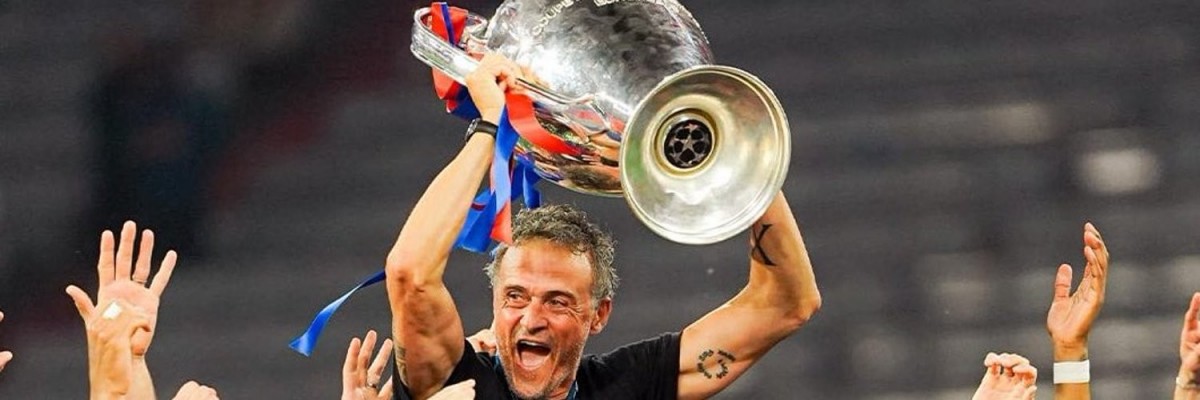
Paris Saint‑Germain head into Saturday’s UEFA Champions League final against Arsenal under the leadership of Luis Enrique, a coach who has spent the past decade building one of the most impressive big‑match résumés in modern football.
Enrique has won 11 of the 12 finals he has managed—an extraordinary record spanning two different clubs and two distinct football cultures, built on a blend of technical dominance and tactical discipline.
His gateway to European glory was Barcelona’s golden generation, before PSG’s collective project brought him back to the continental stage. And his victories were never ordinary: Enrique’s teams typically impose their rhythm early, control matches with confidence, and wear opponents down until they break.
In the 2015 Champions League final, he led Barcelona to a 3–1 win over Juventus, completing the treble. He then defeated Sevilla 5–4 in a wild, attacking UEFA Super Cup. More titles followed—from the Copa del Rey to the Club World Cup against River Plate—powered by a style defined by energy, fluidity, and relentless attacking play.
At Paris Saint‑Germain, this approach evolved. The team became less focused on flair and more aggressive without the ball, relying heavily on intense pressing and dynamic movement rather than long spells of sterile possession.
Yet one defining trait remained unchanged: Luis Enrique’s teams approach finals with a mindset that rejects hesitation—winning is the only option.
This philosophy was on full display last season, when PSG demolished Inter Milan 5–0 in a final that combined precision, pressure, and inevitability. It felt less like a contest and more like a pre‑written outcome.
The only blemish on Enrique’s finals record came in the Club World Cup loss to Chelsea (3–0), after a physically and mentally draining season. But that defeat did not diminish his stature; instead, it reinforced his reputation as a coach capable of reviving teams and restoring belief—something he has done again this season with a squad that seemed exhausted not long ago.
His former player Ivan Rakitić captured Enrique’s aura perfectly in 2017:
“If he asked me to jump off a bridge for him, I’d do it without hesitation. With a look or a smile, he gives you the confidence to succeed.”
Ahead of the Arsenal showdown, Enrique praised his opponent, calling them “the best team in the world without the ball,” while reminding his own players that they are the best in possession.
PSG typically dominate through control, but their deadliest weapon lies in their rapid transitions between defense and attack. Arsenal, meanwhile, face a dual challenge—tactical and psychological—against a team that has grown accustomed to reaching finals under a coach who thrives when the pressure peaks.
Across Barcelona and PSG, through different eras and squads, one truth has remained constant: When Luis Enrique reaches a final, he almost always walks away with the trophy.


