By Dr. Talal Osman
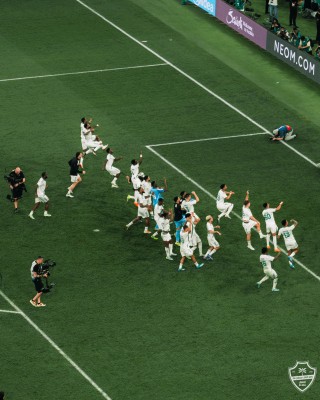
Morocco produced one of the most mature and convincing displays of the opening round, securing a valuable 1–0 victory over Scotland in their first match of the 2026 FIFA World Cup. The win reaffirmed Morocco’s status as one of the strongest Arab teams in the tournament and positioned the Atlas Lions early as serious contenders for a place in the knockout stages.
First Half — Morocco impose structure, Scotland struggle for rhythm
Morocco began with a clear identity: a mid‑block press, compact defensive lines, and rapid transitions down the flanks.
Scotland attempted to impose their trademark physicality, but the Atlas Lions’ back line — marshalled by Saïss and Aguerd — absorbed pressure with composure. Goalkeeper Bono dealt confidently with aerial deliveries, a key Scottish weapon.
The best chance of the half fell to Ismaël Saibari, whose driven effort flashed just wide, a reminder of Morocco’s ability to shift from containment to threat in a heartbeat.
A victory built on personality and discipline
Morocco’s performance was defined by:
- Tactical discipline
- Realistic game management
- Confidence in possession
- Collective defensive responsibility
This was not a chaotic, end‑to‑end contest. It was a match controlled by a team that understood when to accelerate, when to slow the tempo, and when to absorb pressure.
Scotland, despite their strong start to the tournament, found themselves repeatedly forced into wide areas, unable to break Morocco’s compact shape.
What this win really means
A BBC analyst would likely frame the match this way:
“Morocco looked like a side playing with purpose and clarity. Their defensive structure was excellent, their transitions sharp, and their mentality impressive. This was a statement performance.”
The win was not flamboyant it was professional, calculated, and convincing.
A statement of intent from the Atlas Lions
Morocco did more than secure three points. They announced themselves.
Personality, discipline, realism, and confidence — these were the pillars of a deserved victory over a physically demanding Scottish side.
This result positions Morocco as:
- One of the potential surprises of the tournament
- A genuine contender for the knockout rounds
The Atlas Lions have not just started well — they have set a tone.
Ismaël Saibari Makes History… Fastest Goal of the 2026 World Cup and the Fastest Arab Goal in World Cup History
Ismaël Saibari delivered one of the defining moments of Arab football history, scoring the fastest goal of the 2026 FIFA World Cup finding the net just 70 seconds into Morocco’s match against Scotland in Group C.
This wasn’t just an early opener… it was a historic milestone on multiple levels.
First: The Fastest Goal of the 2026 World Cup
Saibari now holds the record for the quickest goal of the tournament, outpacing all other stars and giving Morocco a fiery start in a crucial fixture.
Second: The Fastest Arab Goal in World Cup History
The goal shattered the previous Arab record held by Hakim Ziyech, who scored in the 4th minute against Canada at the 2022 World Cup.
Saibari is now:
- The fastest Arab goalscorer in World Cup history
- The scorer of the fastest goal of the 2026 edition so far
Third: Saibari Enters the Tournament’s Scorers’ List
After scoring against Brazil in the opening match, Saibari added his second goal of the tournament, becoming:
- One of the leading scorers of the World Cup
- The first Moroccan player to score in the first two matches of a World Cup since 1998
Fourth: Impact on the Group
Before kickoff, Scotland topped the group after their 1–0 win over Haiti. But Saibari’s early strike:
- Disrupted Scotland’s game plan
- Gave Morocco a psychological and tactical advantage
- Positioned the Atlas Lions strongly in the race for qualification