By Dr. Talal Othman
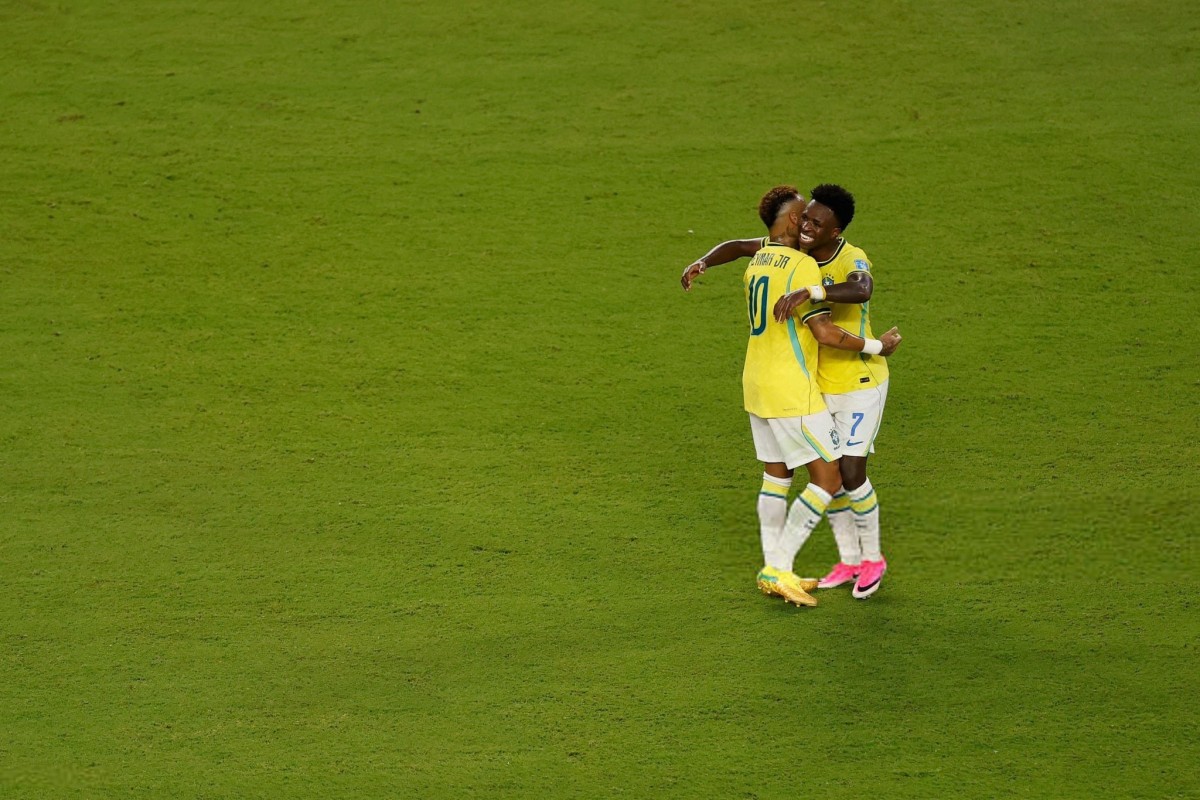
Neymar’s return was more symbolic than artistic. He entered in the 76th minute amid applause from the fans who chanted his name, while Vinicius continued his impressive performance, scoring two goals and threatening the goal at every moment. The 25-year-old player has become the beating heart of the Brazilian attack and represents the new generation that connects the legacy of Pelé, Romário, Ronaldo, and Rivaldo with Brazil’s current dazzling present.Ancelotti’s VisionThe Italian coach emphasized that “the goal is not to play well, but to win,” pointing out that most of Brazil’s goals came from high pressing and quick ball recovery, which reflects “the team’s new mentality.” Regarding the next opponent in Houston on June 25, he said:“Netherlands have more experience than Japan, but Japan achieved good results before the World Cup, while Sweden possess great potential.”Brazil Between Past and FutureWith Vinicius’s brilliance and Neymar’s return, it seems Brazil has regained its psychological and technical balance, beginning its journey in search of a sixth World Cup title with renewed confidence. Ancelotti has succeeded in turning a group of stars into one team with one spirit — something Brazil had been missing in recent years.Overall SystemCarlo Ancelotti relied on a flexible 4-3-3 structure that transforms into 4-2-3-1 during possession, with a clear focus on quick transitions and high pressing after losing the ball. Brazil was not looking for showmanship, but for effectiveness — and this was clearly achieved against the Scottish team, which tried to match the physical rhythm without success.Build-up from the BackMarquinhos and Militao formed the axis of defensive balance, with one of them gradually stepping out to help build play.Casemiro acted as the pivot, dropping between the two center-backs to facilitate vertical passing.Lucas Paquetá played the role of “the engine” between the lines, linking defense and attack with short, quick passes.Result: Clean ball progression from the back, without confusion or dangerous cross-field passes.Movement in the Final ThirdVinicius Junior was the standout offensive hub, moving freely between the wing and central areas.Ancelotti used the principle of “dynamic positioning”: Vinicius swapped positions with Cunha, which confused the Scottish defense.The first and second goals came from high pressing and exploiting opponent errors — reflecting Ancelotti’s new philosophy with Brazil:
“Recover the ball to attack immediately.”Defensive TransitionsWhen losing the ball, the team shifts back into a 4-4-2 shape with Cunha and Vinicius forming the first line of pressure.The young left-back Ryan showed great tactical maturity, closing spaces behind Vinicius and preventing crosses.The pressing was of medium intensity but well-organized, leaving Scotland unable to build coherent attacks.Offensive EffectivenessBrazil took 9 shots on goal, 5 of which were inside the penalty area.Possession reached 61%, but more importantly, the team was more incisive in every attack.Neymar’s substitution in the 76th minute did not change the rhythm, but it added a psychological dimension for both the fans and the players.Ancelotti’s Tactical ReadingAncelotti has redefined Brazil as a collective team with a European touch:
“Recover the ball to attack immediately.”Defensive TransitionsWhen losing the ball, the team shifts back into a 4-4-2 shape with Cunha and Vinicius forming the first line of pressure.The young left-back Ryan showed great tactical maturity, closing spaces behind Vinicius and preventing crosses.The pressing was of medium intensity but well-organized, leaving Scotland unable to build coherent attacks.Offensive EffectivenessBrazil took 9 shots on goal, 5 of which were inside the penalty area.Possession reached 61%, but more importantly, the team was more incisive in every attack.Neymar’s substitution in the 76th minute did not change the rhythm, but it added a psychological dimension for both the fans and the players.Ancelotti’s Tactical ReadingAncelotti has redefined Brazil as a collective team with a European touch:
- Organized pressing
- Rational build-up
- Direct attack
- Balance between beauty and results