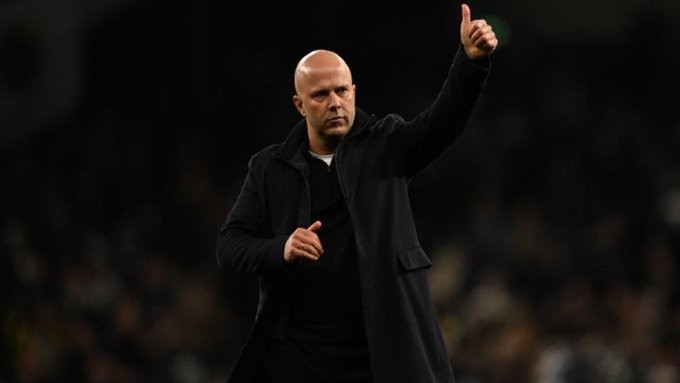
The British press opened the files on Liverpool’s defeat to Paris Saint‑Germain wide open, offering a sharp and critical reading of what happened at Anfield, where blame was divided between Arne Slot, the tactical choices, and the team’s attacking impotence in a contest that exposed the clear gap between the two sides at the highest European level.
The French outlet Foot Mercato clearly captured the mood of anger in England under the headline: “England identifies who is responsible for Liverpool’s failure against Paris,” noting that the British media pointed the finger directly at Slot because of his surprising decision to start striker Alexander Isak, despite his recent return from injury and lack of match rhythm. The report argued that this choice turned into a “losing gamble,” as the player looked isolated and ineffective in a match in which the team needed full readiness and more stable options.
The Guardian went beyond a single decision, headlining its analysis: “Paris Saint‑Germain’s ruthlessness exposes Liverpool’s limits,” arguing that the real difference was visible in the quality of the two teams. Jonathan Wilson wrote that Liverpool entered the match dreaming of a historic European night, but reality showed that this team did not have the tools to match Paris Saint‑Germain, adding that the problem was not only in the lineup but in the system as a whole, especially in defensive transitions and reaction speed.
The Telegraph focused directly on Slot, with the headline: “Slot’s gamble backfires,” insisting that the Dutch coach bore a large share of responsibility because of his tactical choices, especially his reliance on Isak, along with a cautious opening approach that did not suit the need to overturn the tie. It added that Liverpool looked hesitant, as if afraid of conceding, rather than pushing forward with confidence.
The BBC offered a more balanced assessment, but did not hide the scale of the difference, under the headline: “Paris ends the dream... and Liverpool without a shot on target,” pointing out that the English side failed even to threaten the opponent’s goal, a shocking statistic in a match of this magnitude. It said the main problem was attacking bluntness, with no connection between midfield and attack, and no real solutions against a well-organized Paris defense.
Meanwhile, The Athletic used the headline: “How did Paris expose Liverpool’s weaknesses?” noting that the French side intelligently exploited the space behind the defense and imposed its style through pressing and quick transitions. It also linked the decision to start Isak with the lack of cohesion in the front line, arguing that the choices did not suit the nature of the match.
The Daily Mail took a more aggressive tone with the headline: “Anfield disaster... who is to blame?” It blamed the coach and some players, saying the team lacked aggression and fighting spirit and did not show the required response in front of its own fans. It also criticized the individual performances of several players, saying they were not up to the occasion.
In the same vein, The Independent wrote: “A night that reveals the truth... Liverpool are below the European elite,” arguing that the club is still far from competing with Europe’s giants despite its history, and that what happened was not a shock but a reflection of its real level.
Evening Standard highlighted a key point under the headline: “Lack of effectiveness kills Liverpool,” insisting that the main issue was not only tactical decisions, but the absence of attacking solutions, with the team looking unable to create chances or breach the Paris defense.
English media showed no leniency in their judgments. On the BBC, journalist Julian Laurens also described the lineup as “nonsensical,” insisting that Isak should not have started and that Slot made decisive mistakes at a moment when mistakes could not be afforded.
Liverpool Echo offered a more direct assessment, noting that the player delivered a muted performance in his first start since December before being substituted.
The Sun went even further, calling the decision a “dangerous gamble that ended catastrophically,” noting that Isak touched the ball only five times in 45 minutes and took just one shot, with virtually no impact.
Former Liverpool defender Steven Warnock also delivered harsh criticism, saying the player was “not there physically or mentally,” avoided contact, and contributed nothing of note, while Cody Gakpo offered more in just a few minutes.