The Eternal Thousand: When a Number Becomes a Legend
Cristiano Ronaldo and Lionel Messi on the Verge of an Achievement Unlike Any Other
By: Dr. Talal Othman, General Manager — GCC Sport
Some numbers are counted. Others are told as stories. The difference between the two lies not in mathematics, but in the time it takes a human body to say no to its own decline, and to its eternal rival: time itself. The figure of one thousand goals, which only two men in the history of the game are now approaching, is not a passing statistical milestone. It is a turning point in how we define what a footballer can achieve within a single body, a single lifespan, a single career.
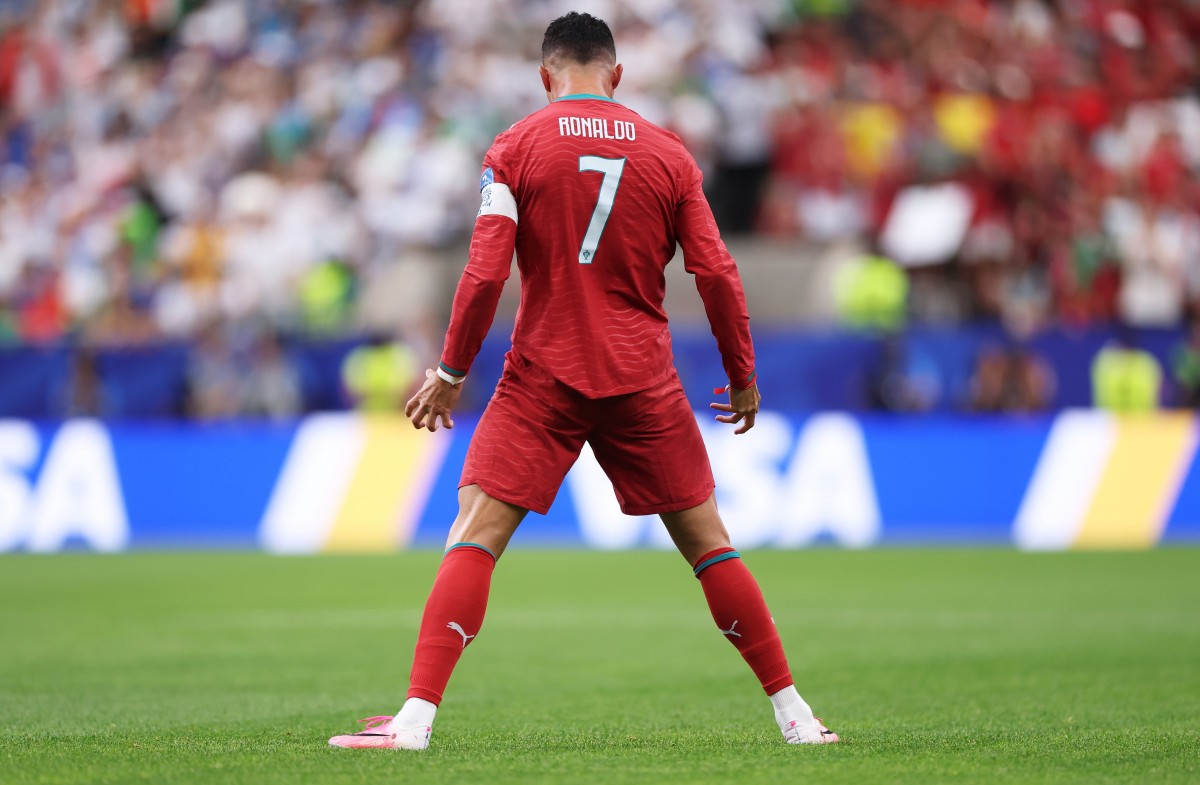
Cristiano Ronaldo, standing at the threshold of his forty-second year, is just 24 goals away from the number 1000. Lionel Messi, no less legendary and no less relentless in his pursuit of history, trails him by a slightly greater distance: 86 goals, after raising his tally to 914 following his latest hat-trick against Algeria in the 2026 World Cup. And so, more than two decades after a rivalry that reshaped the collective consciousness of modern football, the two men find themselves once again on the same starting line except this time, the prize is neither a Ballon d'Or nor a trophy, but something far greater: to become the first human being in the history of this sport to surpass one thousand official goals.
Different Geographies, One Destination
The irony is that the two paths leading these players toward this number resemble one another only in their destination. Ronaldo continues his pursuit from Riyadh, in a league that, only a few years ago, was not seen as a stage for shaping global records yet has transformed, almost single-handedly through his presence, into a launchpad toward immortality. Messi, meanwhile, is writing the final chapter of his story in American soccer, far from the great lights of Europe, yet still capable, as he proved against Algeria, of turning a fleeting moment in a major tournament into a global headline.
Here lies the essence of what makes this race different from any competition that has come before it between the two men. This is no longer a conversation about the better title, the purer skill, or who deserves the Ballon d'Or more. The conversation now is about something more primal, more human: who can resist time for longer, and who carries within their body and will enough fuel to keep bending the net again and again, in a game that shows no mercy to anyone past thirty.
A Race Against the Clock, Not Against Each Other
What is striking is that what unites Ronaldo and Messi today is not the direct rivalry of their golden Spanish era between Madrid and Barcelona, but a new kind of competition closer to two parallel races, each man running against his own version of time. Ronaldo, with his legendary physical discipline that has become a case study in the world of sport, appears closest to reaching the number first; he need only maintain his current scoring rate with Al-Nassr and the Portuguese national team to cross the threshold this season or early in the next.
Messi, for his part, faces a challenge of a different nature: the larger goal gap means he needs at least two more seasons yet what gives him a psychological edge that cannot be measured in numbers is that, even two decades after his breakthrough, he still possesses that mental sharpness that made Algeria's coaching staff watch him score a hat-trick in a single match as though the clock had not moved since Barcelona in 2009.
More Than a Number: Redefining Longevity
When analysts speak of the thousand-goal mark, many tend to reduce the achievement to a cold statistic. But the truth runs far deeper. What Ronaldo and Messi are doing today is redefining the very concept of "peak" in football. For decades, the years between 27 and 32 were considered a striker's true prime, with decline assumed inevitable afterward. Yet these two men have shattered that unwritten law, proving that a peak can be extended not by talent alone, but through an entire physical and psychological culture: diet, rehabilitation, injury management, and perhaps most importantly, a hunger that never dims, to prove themselves anew every week, before every crowd, as if every match were the first rather than the thousandth.
Ronaldo already holds the record as the all-time top scorer in the UEFA Champions League with 140 goals, and is the only player to have scored in five different World Cup editions. Messi, meanwhile, holds the title of all-time top scorer at the World Cup, led Argentina to back-to-back Copa América titles, and became only the second player in the history of men's elite football to reach the 900-goal mark after Ronaldo himself. These two facts alone are enough to understand why what is unfolding today cannot be compared to any scoring race the game has ever seen.
The Question of Immortality
The question that will occupy football lovers throughout this season is this: who will get there first? Statistically, Ronaldo is the likelier man to cross the finish line first, given his smaller gap and a discipline that seems to admit no exceptions. But football and these two men in particular — have taught us never to bet on logic alone when they are involved. Perhaps the coming weeks will bring a surprise. Perhaps each will reach his number in his own season, in his own time, making that moment wherever it happens, whatever shirt is worn one of the purest moments in twenty-first-century sport: a moment in which no player triumphs over another, but humanity itself triumphs over the very idea of decline.
And whether Ronaldo arrives first from Riyadh, or Messi from Miami, history will not record this as an individual feat alone, but as testimony that true greatness is never a fleeting moment it is a two-decade journey of unyielding resolve.
Dr. Talal Othman General Manager — GCC Sport